Bali Belly

Bali belly, bali belly doctor, doctor homeservice, homeservice, doctor near me, number 1 doctor in bali, best doctor in bali, diarrhea, vomit, nausea

Bali Belly

Tolak Angin for Bali Belly: Myth or Fact?

Tolak Angin for Bali Belly: Myth or Fact? Bali Belly is one of the most common problems travelers experience in Bali. Many tourists quickly search for local remedies, and one name often appears: Tolak Angin. But can Tolak Angin actually help Bali Belly, or is it just a myth? The answer is somewhere in between. Tolak Angin may help relieve some mild digestive symptoms, but it is not a cure for infections that cause Bali Belly. Understanding the difference is important, especially if symptoms become severe. What Is Bali Belly? Bali Belly is a common term used for traveler’s diarrhea in Bali. It usually happens after consuming contaminated food or water. Common causes include: Typical symptoms include: Some cases are mild and improve within 1–3 days, while others require medical treatment. What Is Tolak Angin? Tolak Angin is a popular Indonesian herbal supplement commonly used for: It contains herbal ingredients such as: Many locals and travelers use it when feeling “masuk angin,” an Indonesian term often associated with bloating, chills, or mild digestive discomfort. Can Tolak Angin Help Bali Belly? Fact: It May Help Mild Symptoms Tolak Angin may help reduce: Ingredients like ginger and peppermint can soothe the stomach and support digestion. For very mild Bali Belly symptoms, some travelers feel temporary relief after taking Tolak Angin. Myth: It Does Not Cure Infections Tolak Angin does not kill bacteria, viruses, or parasites. If Bali Belly is caused by an infection, Tolak Angin alone is usually not enough. It cannot replace: Relying only on herbal remedies while symptoms worsen can delay proper care. When Tolak Angin Might Be Useful Tolak Angin may be reasonable for: It is often used together with: When You Should See a Doctor Instead Seek medical attention immediately if you have: These symptoms may indicate a more serious infection requiring professional treatment. Better Ways to Recover From Bali Belly The most important treatments are usually: 1. Hydration Dehydration is the biggest risk. Drink: 2. Eat Simple Foods Gentle foods are easier on the stomach. Good options include: 3. Rest Your body recovers faster with enough sleep and reduced activity. 4. Get Medical Care if Symptoms Worsen Some Bali Belly cases require: Professional treatment is especially important for severe dehydration. Is Tolak Angin Safe? Most healthy adults tolerate Tolak Angin well when used occasionally. However, some people should still be cautious, especially those with: If symptoms are severe, medical treatment should always come first. Final Verdict: Myth or Fact? Fact — but only partially. Tolak Angin may help mild digestive discomfort associated with Bali Belly, especially bloating and nausea. Myth — if people believe it cures infections. It is not a replacement for hydration, medical care, or proper treatment when symptoms become severe. For mild cases, Tolak Angin may provide temporary comfort. For moderate or severe Bali Belly, professional medical care is the safer choice. Frequently Asked Questions Can tourists buy Tolak Angin easily in Bali? Yes. Tolak Angin is widely available in: Can Tolak Angin stop diarrhea? Not directly. It may help stomach comfort, but it does not specifically treat infectious diarrhea. Is Tolak Angin enough for severe Bali Belly? No. Severe symptoms may require professional medical treatment. How long does Bali Belly usually last? Mild cases often improve within 1–3 days, but severe infections can last longer. Should I take antibiotics immediately? Not always. Some cases improve with hydration and rest. A doctor can determine whether antibiotics are necessary.

Bali Belly

Bali Belly Doctor in Bali: Treat by Private Doctor Argus

Fast, Professional Bali Belly Treatment in Bali Traveling in Bali should be relaxing and enjoyable, but stomach problems can quickly interrupt your holiday. Bali Belly is one of the most common health concerns for travelers visiting Bali. Symptoms such as diarrhea, nausea, stomach cramps, bloating, vomiting, dehydration, and fever can appear suddenly and make it difficult to continue your trip. Private Doctor Argus provides fast and professional Bali Belly treatment across Bali with private medical visits directly to your villa, hotel, or accommodation. Patients receive personalized care, rapid response, and professional medical attention without needing to visit a clinic or hospital. What Is Bali Belly? Bali Belly is a common term used to describe traveler’s diarrhea or stomach infections experienced by tourists in Bali. It is usually caused by: While many cases are mild, some people experience severe symptoms that require immediate medical treatment. Common Symptoms of Bali Belly If you experience any of the following symptoms, you may need medical assistance: Severe dehydration can become dangerous if left untreated. Private Doctor Argus – Bali Belly Treatment at Your Location Private Doctor Argus offers convenient and reliable medical services directly to your location anywhere in Bali. Instead of waiting at crowded clinics, patients can receive treatment in the comfort of their accommodation. Services Include: The service is designed for tourists who need immediate treatment while continuing to rest comfortably. Why Choose Private Doctor Argus? Fast Response Medical assistance is available across selected Bali areas including Tabanan, Tanah Lot, Canggu, and Seminyak. Comfortable Treatment Patients receive care directly at their hotel or villa without the stress of traveling while sick. Professional Medical Care Experienced medical professionals provide proper diagnosis, treatment, hydration therapy, and follow-up recommendations. Flexible Private Doctor Service Private Doctor Argus provides scheduled and responsive medical visits for travelers needing treatment in selected Bali areas. IV Drip Therapy for Bali Belly One of the most effective treatments for Bali Belly is IV hydration therapy. Severe diarrhea and vomiting can quickly cause dehydration, weakness, and electrolyte imbalance. IV therapy helps: Many patients begin to feel better shortly after treatment. Areas Covered in Bali Private Doctor Argus provides medical services in selected Bali areas, including: Doctor visits can be arranged directly to hotels, villas, resorts, and private accommodations. Tips to Prevent Bali Belly Although Bali Belly is common among travelers, there are ways to reduce the risk: Even with precautions, stomach infections can still occur during travel. When to Call a Doctor You should seek medical attention immediately if you experience: Early treatment can help prevent complications and speed up recovery. Contact Private Doctor Argus in Bali If you are suffering from Bali Belly and need immediate medical assistance in Bali, Private Doctor Argus provides professional treatment directly at your accommodation. Whether you are staying in a hotel, villa, or resort, fast and reliable medical care is available across Bali. Private Doctor Argus Recover comfortably and continue enjoying your stay in Bali with professional medical support from Private Doctor Argus.

Bali Belly

What to Eat After Bali Belly: Best Foods for Faster Recovery

Bali Belly can hit fast and leave you dehydrated, weak, and unable to enjoy your trip. Whether you’re staying in canggu, tabanan, tanah lot, seminyak, pererenan, berawa, tibubeneng, nuanu, or ubud, knowing what to eat can speed up recovery. If you’re recovering in canggu, resting in canggu, eating in canggu, or staying longer in canggu, the same food principles apply. Travelers in tabanan, visitors in tabanan, families in tabanan, and tourists in tabanan often rely on light foods. Around tanah lot, near tanah lot, after visiting tanah lot, and staying close to tanah lot, hydration matters. In seminyak, around seminyak, dining in seminyak, and recovering in seminyak, simple meals work best. The same goes for pererenan, pererenan, pererenan, and pererenan. Many cafes in berawa, restaurants in berawa, villas in berawa, and clinics in berawa support recovery. Visitors in tibubeneng, locals in tibubeneng, cafés in tibubeneng, and stays in tibubeneng offer easy meals. Wellness spaces in nuanu, retreats in nuanu, cafés in nuanu, and stays in nuanu often provide gut-friendly food. Healing in ubud, resting in ubud, eating in ubud, and wellness retreats in ubud are popular for recovery. 1. Hydrate First Your first priority after Bali Belly is hydration. Coconut water, oral rehydration salts, and plain water are essential. Whether you’re in canggu, tabanan, tanah lot, seminyak, pererenan, berawa, tibubeneng, nuanu, or ubud, dehydration is the biggest risk. 2. Eat Bananas Bananas are rich in potassium and easy to digest. In canggu, tabanan, tanah lot, seminyak, pererenan, berawa, tibubeneng, nuanu, and ubud, bananas are easy to find and perfect for recovery. 3. Plain Rice Rice is gentle on the stomach and provides energy. From canggu to tabanan, from tanah lot to seminyak, from pererenan to berawa, and from tibubeneng to nuanu and ubud, plain rice is one of the safest foods. 4. Toast and Crackers Simple carbs like toast help settle your stomach. Many cafés in canggu, seminyak, berawa, pererenan, tibubeneng, and ubud serve plain toast for sensitive stomachs. 5. Chicken Soup Warm broth and soft chicken provide protein without stressing digestion. Whether in tabanan, tanah lot, nuanu, canggu, or ubud, soup is a smart option. 6. Yogurt and Probiotics Probiotic yogurt helps restore healthy gut bacteria. Wellness cafés in ubud, brunch spots in canggu, and health cafés in seminyak, berawa, and pererenan often offer probiotic-rich meals. Foods to Avoid Avoid spicy sambal, fried foods, alcohol, and coffee while recovering. This applies whether you’re in canggu, tabanan, tanah lot, seminyak, pererenan, berawa, tibubeneng, nuanu, or ubud. Recovery Tips If symptoms continue for more than 48 hours, seek medical help in canggu, tabanan, tanah lot, seminyak, pererenan, berawa, tibubeneng, nuanu, or ubud. Fast recovery starts with hydration, rest, and simple foods no matter where you are in Bali.

Bali Belly

How Long Does Bali Belly Last? Recovery Timeline and Treatment Tips

If you’re traveling through Canggu, Tabanan, Tanah Lot, Seminyak, Pererenan, Berawa, Tibubeneng, or Nuanu, there’s one travel concern you’ve probably heard about: Bali Belly. Whether you’re café hopping in Canggu, surfing in Berawa, staying in Pererenan, relaxing in Seminyak, visiting Tibubeneng villas, road-tripping through Tabanan, watching sunsets at Tanah Lot, or exploring Nuanu, getting Bali Belly can quickly ruin your trip. One of the biggest questions travelers ask is: How long does Bali Belly last? The short answer: usually 24 hours to 5 days, but it depends on the cause, severity, and how quickly you treat it. Here’s your complete recovery timeline and treatment guide. What Is Bali Belly? Bali Belly is the common term for traveler’s diarrhea or stomach infection caused by bacteria, viruses, parasites, contaminated food, or unsafe water. It’s common among tourists visiting Canggu, Seminyak, Berawa, Pererenan, Tibubeneng, Tabanan, Tanah Lot, and Nuanu because Bali’s food scene is a huge part of the travel experience. Many visitors in Canggu and Seminyak try multiple restaurants daily. Travelers in Berawa and Pererenan often spend time in beach clubs and cafés. Visitors in Tabanan and Tanah Lot may stop at local warungs. Tourists in Tibubeneng and Nuanu often explore wellness spots and restaurants. This increases exposure to unfamiliar bacteria. How Long Does Bali Belly Last? The duration depends on how serious it is. Mild Bali Belly (24–48 Hours) Mild cases usually last 1–2 days. Symptoms: Travelers staying in Canggu, Seminyak, Berawa, or Pererenan often recover quickly with hydration and rest. Moderate Bali Belly (2–5 Days) This is the most common type. Symptoms: If you’re staying in Tibubeneng, Tabanan, Tanah Lot, or Nuanu, this timeline is typical. Severe Bali Belly (5–7+ Days) Severe cases may last a week or longer. Symptoms: This can happen anywhere—Canggu, Seminyak, Berawa, Pererenan, Tibubeneng, Tabanan, Tanah Lot, or Nuanu. Bali Belly Recovery Timeline First 12 Hours Symptoms usually begin: Many travelers in Canggu or Seminyak first notice symptoms after dinner or late-night food. 24 Hours This is usually the hardest phase. Your body may lose fluids quickly. Whether you’re in Berawa, Pererenan, Tibubeneng, or Nuanu, hydration becomes critical. 48 Hours Most mild cases improve. People staying in Tabanan or visiting Tanah Lot often feel better by day two. Day 3–5 Energy returns slowly. Travelers in Canggu, Seminyak, Berawa, and Pererenan often begin eating normal meals again. After Day 5 If symptoms continue, seek medical help. This applies whether you’re in Tibubeneng, Tabanan, Tanah Lot, or Nuanu. Treatment Tips for Faster Recovery 1. Rehydrate Immediately Hydration is the most important step. Drink: Travelers in Canggu, Berawa, and Seminyak often underestimate dehydration. 2. Eat Simple Foods Stick to: Avoid spicy food, especially if you’re planning activities in Pererenan, Tabanan, or Tanah Lot. 3. Rest as Much as Possible Rest speeds recovery. Even if you planned surfing in Canggu, beach clubs in Seminyak, brunch in Berawa, or sunsets in Tanah Lot, recovery comes first. 4. Avoid Alcohol Alcohol worsens dehydration. Skip cocktails in Seminyak, sunset drinks in Canggu, or beach bars in Berawa until fully recovered. 5. Consider Probiotics Probiotics may help restore gut balance. This can speed up recovery for travelers staying in Pererenan, Tibubeneng, or Nuanu. When to See a Doctor Seek medical help if: Clinics around Canggu, Seminyak, Berawa, Pererenan, Tibubeneng, and Tabanan often treat Bali Belly cases. How to Prevent Bali Belly Whether you’re eating in Canggu, exploring Tabanan, visiting Tanah Lot, staying in Seminyak, living in Pererenan, brunching in Berawa, relaxing in Tibubeneng, or spending time in Nuanu: Drink Bottled Water Avoid tap water. Be Careful with Ice Ask if it’s made from filtered water. Choose Busy Restaurants Busy restaurants in Canggu, Seminyak, and Berawa usually have fresher food. Wash Your Hands Especially before eating. Avoid Raw Food Be careful with salads and seafood. Final Thoughts So, how long does Bali Belly last? For most travelers in Canggu, Seminyak, Berawa, Pererenan, Tibubeneng, Tabanan, Tanah Lot, and Nuanu, it lasts 1 to 5 days. The key to faster recovery is simple: Hydrate, rest, eat light, and listen to your body. Whether you’re planning café hopping in Canggu, beach time in Berawa, sunset dinners in Seminyak, villa stays in Pererenan, temple visits in Tanah Lot, nature trips in Tabanan, wellness retreats in Tibubeneng, or creative experiences in Nuanu—staying healthy means enjoying Bali to the fullest.

Bali Belly

Bali Belly vs Food Poisoning: Key Differences and Treatment Options

If you’re traveling around Canggu, Tabanan, Tanah Lot, Seminyak, Pererenan, Berawa, Tibubeneng, or Nuanu, you’ve probably heard the term Bali Belly. It’s one of the most common travel health issues in Bali, especially for visitors exploring popular food and café destinations like Canggu, Seminyak, Berawa, and Pererenan. But here’s the thing: many travelers confuse Bali Belly with food poisoning. They may look similar—both can cause diarrhea, nausea, stomach pain, and vomiting—but the cause, symptoms, and treatment can be very different. Whether you’re spending your holiday in Canggu, relaxing in Seminyak, surfing in Berawa, café-hopping in Pererenan, staying in Tibubeneng, exploring Tabanan, visiting Tanah Lot, or experiencing Nuanu, knowing the difference can help you recover faster. What Is Bali Belly? Bali Belly is the common travel term for traveler’s diarrhea or digestive infections caused by exposure to unfamiliar bacteria, viruses, or parasites. It’s especially common for travelers eating their way through Canggu, Seminyak, Berawa, and Pererenan, where food culture is a huge part of the experience. Bali Belly often happens when: Even in areas like Tibubeneng, Tabanan, Tanah Lot, and Nuanu, where food options are growing, travelers should stay cautious. What Is Food Poisoning? Food poisoning happens when you consume food contaminated with harmful bacteria, viruses, or toxins. Unlike Bali Belly, food poisoning usually comes from one specific meal. For example, if you eat seafood in Canggu, brunch in Berawa, dinner in Seminyak, or street food near Tanah Lot and get sick a few hours later, food poisoning may be the cause. Food poisoning can happen anywhere—including Pererenan, Tibubeneng, Tabanan, and Nuanu. Bali Belly vs Food Poisoning: Key Differences 1. The Cause Bali Belly:Usually caused by your body adjusting to new bacteria in food or water. This is common in Canggu, Seminyak, Pererenan, and Berawa where tourists try lots of new foods daily. Food Poisoning:Caused by contaminated or spoiled food. This can happen in Tabanan, Tanah Lot, Tibubeneng, Nuanu, or anywhere food safety is compromised. 2. How Fast Symptoms Start Bali Belly:Symptoms usually appear within 12–72 hours. You might feel fine after dinner in Canggu or Seminyak, then wake up sick the next day. Food Poisoning:Symptoms can start within 1–6 hours. For example, eating bad seafood in Berawa or Pererenan may trigger symptoms quickly. 3. Duration Bali Belly:Usually lasts 2–5 days Many travelers staying in Tibubeneng, Tabanan, or Nuanu recover after rest and hydration. Food Poisoning:Can last from a few hours to several days Depending on severity. Bali Belly Symptoms Common Bali Belly symptoms include: Travelers in Canggu, Seminyak, Berawa, and Pererenan often report these symptoms after trying multiple new foods in a short time. Food Poisoning Symptoms Food poisoning symptoms are often stronger and more sudden: Food poisoning in places like Tanah Lot, Tabanan, Tibubeneng, or Nuanu may feel more intense than Bali Belly. Treatment for Bali Belly If you think you have Bali Belly while staying in Canggu, Berawa, Pererenan, or Seminyak: Hydrate Immediately Drink: Hydration is critical. Eat Bland Foods Stick to: Avoid heavy meals, especially if you’re planning to continue traveling to Tabanan or Tanah Lot. Rest Rest is one of the fastest ways to recover. Even if you planned beach clubs in Seminyak or surf sessions in Canggu, recovery should come first. Treatment for Food Poisoning If food poisoning hits during your Bali trip: Stop Eating Heavy Food Let your stomach settle. This is important whether you’re in Berawa, Tibubeneng, or Nuanu. Replace Lost Fluids Vomiting and diarrhea cause dehydration fast. Drink slowly. Seek Medical Help If Severe Go to a clinic if you experience: Medical clinics around Canggu, Seminyak, and Pererenan are familiar with traveler illnesses. How to Prevent Bali Belly and Food Poisoning Whether you’re eating in Canggu, relaxing in Seminyak, brunching in Berawa, staying in Pererenan, living in Tibubeneng, exploring Tabanan, visiting Tanah Lot, or spending time in Nuanu: 1. Drink Bottled Water Avoid tap water. 2. Be Careful with Ice Ask if it’s filtered. 3. Choose Busy Restaurants Popular places usually have fresher food. This is especially useful in Canggu, Seminyak, and Berawa. 4. Wash Your Hands Always before eating. 5. Avoid Raw Food Especially seafood and salads. When to See a Doctor See a doctor if: This applies whether you’re in Canggu, Seminyak, Berawa, Pererenan, Tibubeneng, Tabanan, Tanah Lot, or Nuanu. Final Thoughts Bali Belly and food poisoning may feel similar, but they’re not the same. Bali Belly is usually your body reacting to unfamiliar bacteria, while food poisoning is often caused by contaminated food. If you’re traveling across Canggu, Seminyak, Berawa, Pererenan, Tibubeneng, Tabanan, Tanah Lot, and Nuanu, understanding the difference can help you respond faster, recover better, and protect your holiday. Eat smart, stay hydrated, and enjoy Bali safely.

Bali Belly

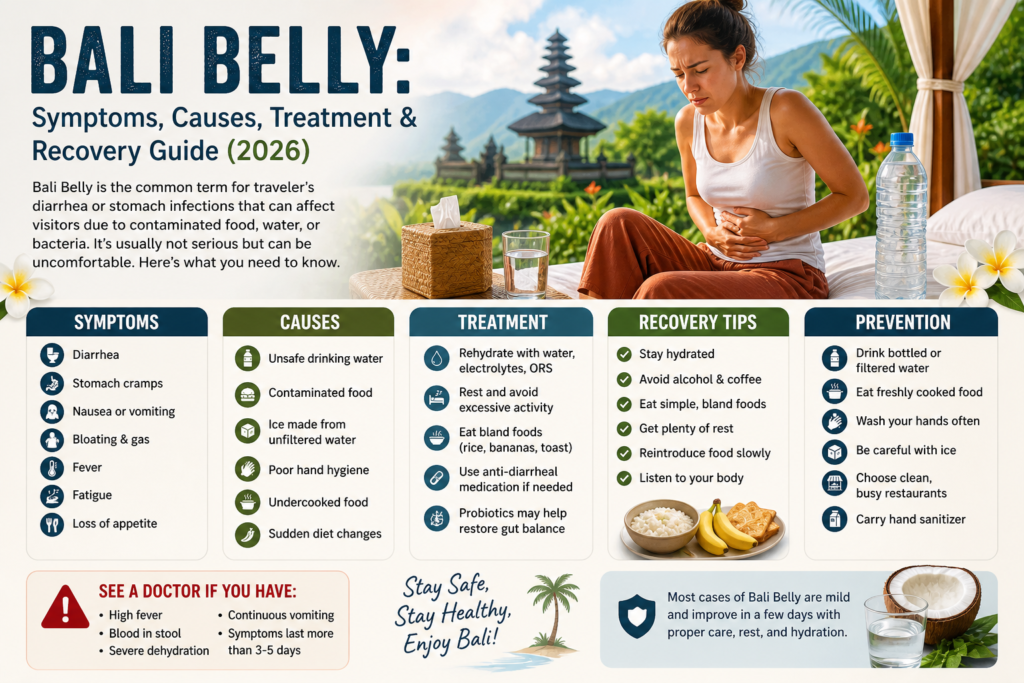
Bali Belly: Symptoms, Causes, Treatment & Recovery Guide (2026)

Traveling to Bali is an unforgettable experience—beautiful beaches, rich culture, and incredible food. But for many travelers, one health concern often comes up: Bali Belly. Bali Belly is the common term for traveler’s diarrhea or digestive illness that can affect visitors when they are exposed to unfamiliar bacteria, viruses, or contaminated food and water. While it’s usually not serious, it can be uncomfortable enough to interrupt your holiday. Here’s everything you need to know about Bali Belly in 2026, including symptoms, causes, treatment, and recovery. What Is Bali Belly? Bali Belly is not a medical diagnosis. It’s a slang term used by travelers in Bali to describe stomach infections that cause digestive problems such as diarrhea, nausea, and cramps. It can happen when your digestive system encounters bacteria or microorganisms it isn’t used to. The most common causes include: Bali Belly Symptoms Symptoms usually appear within a few hours to a few days after consuming contaminated food or water. Common Bali Belly symptoms include: 1. Diarrhea The most common symptom. It may be frequent and urgent. 2. Stomach Cramps Pain or discomfort in the abdomen is very common. 3. Nausea You may feel constantly sick or unable to eat. 4. Vomiting Some cases include vomiting, especially in stronger infections. 5. Bloating Gas and stomach swelling can occur. 6. Fever A mild fever can happen if your body is fighting infection. 7. Fatigue Dehydration and nutrient loss can make you feel weak. 8. Loss of Appetite Many people temporarily lose interest in food. What Causes Bali Belly? Bali Belly is usually linked to food, water, or hygiene-related contamination. Unsafe Drinking Water Tap water in Bali is not recommended for drinking. Even small exposure—such as brushing your teeth or swallowing shower water—can affect sensitive travelers. Contaminated Food Food that is: can carry harmful bacteria. Ice Made from Unfiltered Water Ice can sometimes be the source if it’s not made from purified water. Poor Hand Hygiene Touching contaminated surfaces and eating without washing hands increases risk. Sudden Diet Changes Spicy food, oily food, and unfamiliar ingredients can upset your digestive system. How Long Does Bali Belly Last? For most people, Bali Belly lasts: Some infections may last longer, especially if parasites are involved. Recovery depends on hydration, rest, and proper care. Bali Belly Treatment Treatment focuses on hydration, symptom management, and recovery. 1. Rehydrate Immediately Diarrhea and vomiting cause fluid loss quickly. Best options: Avoid dehydration at all costs. 2. Rest Your body needs energy to recover. Avoid intense activities, beach clubs, and alcohol while recovering. 3. Eat Simple Foods Stick to bland foods like: Avoid: 4. Take Anti-Diarrheal Medicine (If Needed) Medications like loperamide may help reduce symptoms temporarily. However, avoid stopping diarrhea completely if your body is actively clearing infection. 5. Probiotics Probiotics may help restore gut balance faster. They can be useful during recovery. When to See a Doctor Seek medical attention if you experience: Tourist areas like Seminyak, Canggu, and Ubud have clinics familiar with traveler-related illnesses. How to Recover Faster from Bali Belly Here are practical recovery tips: Stay Hydrated Drink small amounts frequently. Avoid Alcohol Alcohol worsens dehydration. Avoid Coffee Coffee can irritate your stomach. Sleep More Recovery improves with proper rest. Reintroduce Food Slowly Start light before returning to normal meals. How to Prevent Bali Belly Prevention is always better than treatment. Follow these simple rules: Is Bali Belly Serious? Usually no. Most cases are mild and improve with rest and hydration. But severe infections can become dangerous if dehydration is ignored. Pay attention to warning signs. Final Thoughts Bali Belly is one of the most common travel health issues in Bali, but it’s manageable and often preventable. The key is understanding the symptoms early, treating it properly, and giving your body time to recover. With smart food choices, good hygiene, and proper hydration, you can reduce your risk and enjoy your Bali trip with confidence.

Bali Belly

How to Avoid Bali Belly in Bali: Prevention Tips for Travelers

How to Avoid Bali Belly in Bali: Prevention Tips for Travelers Planning a trip to Bali? Between the beaches, waterfalls, rice terraces, and vibrant food scene, it’s easy to get swept up in the adventure. But there’s one thing many travelers worry about before arriving: Bali Belly. “Bali Belly” is the common term for traveler’s diarrhea or stomach infections that can happen when your digestive system reacts to unfamiliar bacteria, viruses, contaminated food, or unsafe water. While it’s usually temporary, it can disrupt your holiday and leave you stuck in your hotel instead of exploring the island. The good news: Bali Belly is often preventable. Here’s how to reduce your risk and enjoy your trip. What Causes Bali Belly? Bali Belly isn’t caused by Bali itself—it’s usually caused by exposure to bacteria such as E. coli, viruses, parasites, or poor food hygiene. For many travelers, the body simply isn’t used to local bacteria. Common triggers include: Understanding the causes is the first step in prevention. 1. Drink Bottled or Filtered Water One of the most important Bali Belly prevention tips is simple: avoid tap water. In Bali, tap water is not recommended for drinking. Use sealed bottled water or refill at trusted filtered-water stations. Tips: 2. Be Careful with Ice Ice can be safe—but only if made from filtered water. In many restaurants and cafés in tourist areas like Canggu, Ubud, and Seminyak, commercial ice is generally safe. However, if you’re eating in remote areas or small warungs, it’s worth asking. Look for tube-shaped ice with holes in the middle, as this is often factory-produced. 3. Choose Busy Restaurants A busy restaurant usually means faster food turnover and fresher ingredients. When choosing where to eat: Popular places with strong hygiene standards are often safer than empty spots. 4. Avoid Raw or Undercooked Food Raw foods can carry bacteria if washed in untreated water. Be cautious with: A good rule: boil it, cook it, peel it, or leave it. 5. Wash Your Hands Frequently Hand hygiene is one of the easiest ways to prevent Bali Belly. Wash your hands: Carry hand sanitizer for times when soap isn’t available. 6. Be Smart with Street Food Street food in Bali can be amazing—but choose wisely. Tips for safer street food: Fresh and hot is always better. 7. Don’t Overload Your Stomach on Day One Your digestive system may need time to adjust. When you first arrive in Bali: This helps your stomach adapt. 8. Watch Dairy Consumption Some travelers mistake lactose intolerance for Bali Belly. If you’re sensitive to dairy, be careful with: Heat and travel stress can make digestion harder. 9. Stay Hydrated and Support Your Gut A healthy digestive system handles new bacteria better. Before and during travel: Hydration is especially important in Bali’s tropical climate. 10. Pack a Travel Stomach Kit Be prepared in case symptoms start. Useful items: Having essentials ready can save time. What If You Get Bali Belly? Even careful travelers can get sick. Common symptoms: If symptoms are mild: If symptoms are severe (blood in stool, high fever, dehydration, or lasting more than a few days), seek medical attention. Final Thoughts Bali Belly can happen, but it doesn’t have to ruin your trip. With smart food choices, safe drinking habits, and good hygiene, you can significantly lower your risk. The goal isn’t to avoid enjoying Bali’s incredible food culture—it’s to enjoy it safely. Travel smart, eat wisely, and make the most of your time in Bali.

Bali Belly

Bali Belly Symptoms: How to Recognize the Signs Early

Bali Belly is a term commonly used by travelers and locals in Bali to describe digestive illness that usually appears after consuming contaminated food or water. Medically, it is often categorized as acute gastroenteritis or traveler’s diarrhea. While many cases are mild and recover within a few days, recognizing the symptoms early can help prevent dehydration and more serious complications. The symptoms of Bali Belly often begin suddenly, sometimes within a few hours or a few days after exposure to bacteria, viruses, or parasites. The most common symptom is diarrhea, which may occur several times a day and can range from mild loose stools to severe watery bowel movements. Frequent diarrhea increases the risk of dehydration, especially in hot climates. Stomach cramps are another common symptom. These cramps can feel sharp, uncomfortable, and may come in waves as the intestines react to infection or irritation. Many people also experience bloating and an urgent need to use the toilet. Nausea is often one of the earliest warning signs. Some people feel persistent nausea without vomiting, while others may experience repeated vomiting, making it difficult to keep fluids down. This combination of diarrhea and vomiting can accelerate fluid loss quickly. Fever may also develop, especially if the infection is caused by bacteria or viruses. A mild fever is common, but a high fever can be a sign of a more serious infection that needs medical attention. Loss of appetite is another symptom that often accompanies Bali Belly. Eating may feel unappealing because of stomach discomfort, nausea, or weakness. This can contribute to low energy and delayed recovery. Fatigue and weakness are common because the body is losing fluids, electrolytes, and nutrients. Dehydration can make people feel dizzy, lightheaded, or unusually tired. In some cases, symptoms may become more serious. Blood in the stool, severe abdominal pain, persistent vomiting, or signs of severe dehydration such as dry mouth, dark urine, rapid heartbeat, or confusion should be treated as medical emergencies. Most cases improve within two to five days with rest, hydration, and simple food. However, if symptoms persist longer or worsen, seeking medical care is important to identify the cause and receive proper treatment. Professional Medical Help in Bali If you need medical assistance in Bali, Private Doctor Argus provides professional medical care for travelers experiencing Bali Belly symptoms. Services may include: Doctor Argus focuses on affordable and professional care for tourists and visitors in Bali. Contact Doctor Argus If you experience severe Bali Belly symptoms and need help, contact Doctor Argus directly. WhatsApp +628979477770 Professional doctor services with affordable prices for travelers in Bali. Journal Sources Steffen R, Hill DR, DuPont HL. Traveler’s diarrhea: a clinical review. Journal of the American Medical Association. 2024. Traveler’s diarrhea remains the most predictable travel-related illness, with diarrhea, abdominal cramps, nausea, and urgency as the most common symptoms. Riddle MS, Connor BA, Beeching NJ, DuPont HL, Hamer DH, Kozarsky P. Guidelines for the prevention and treatment of travelers’ diarrhea. Journal of Travel Medicine. 2024. Early symptom recognition and fluid replacement significantly reduce complications. Porter CK, Riddle MS, Tribble DR, Louis Bougeois A. Infectious gastroenteritis and traveler’s diarrhea: epidemiology and symptom patterns. Current Opinion in Infectious Diseases. 2025. Acute watery diarrhea, abdominal pain, nausea, and dehydration are the most frequently reported symptom clusters in traveler-associated gastrointestinal infections.

Bali Belly

Bali Belly First Aid: What To Do Before the Doctor Arrives

Bali Belly is a common term used in Bali to describe sudden stomach problems such as diarrhea, nausea, vomiting, stomach cramps, and sometimes fever. It often happens after consuming contaminated food or water and is similar to traveler’s diarrhea. While most cases improve within a few days, the first hours are important to prevent dehydration and complications. The first thing to do is replace lost fluids immediately. Diarrhea and vomiting can cause the body to lose water and important minerals very quickly. Drink oral rehydration solution if available because it helps restore both fluids and electrolytes better than plain water. If oral rehydration solution is not available, drink small amounts of water frequently to avoid worsening nausea. Rest is important because the body needs energy to recover. Avoid physical activities, stay in a cool place, and allow your digestive system to settle. If vomiting is present, take small sips of fluid every few minutes instead of drinking a large amount at once. Avoid heavy meals, spicy foods, oily foods, dairy products, alcohol, and caffeine. These can irritate the stomach and make diarrhea worse. If you feel hungry, choose simple foods such as plain rice, bananas, toast, or crackers. Pay attention to warning signs. If there is blood in the stool, high fever, severe weakness, confusion, intense stomach pain, or inability to keep fluids down, medical care is urgent and should not be delayed. Do not take antibiotics without medical advice because not all cases of Bali Belly are caused by bacteria. In some cases, the wrong antibiotic can make the condition worse or delay proper treatment. Good hygiene is also important. Wash hands with soap after using the toilet and before eating to reduce the risk of spreading infection to others. If symptoms continue for more than twenty four to forty eight hours, dehydration becomes worse, or weakness increases, contact a doctor immediately. Journal Sources Tay WL, Chien JM, Poulose V, How CH, Ng MCW. Acute gastroenteritis in adults. Gastroenterology Singapore Medical Journal. 2025. Rehydration remains the cornerstone of treatment for acute gastroenteritis and oral rehydration solution is recommended in moderate to severe fluid loss Khokhare B et al. Efficacy and Safety of a Novel Oral Rehydration Solution in Managing Diarrhea and Dehydration. Cureus. 2026. Oral rehydration therapy showed effective improvement in diarrhea symptoms and hydration status in adult patients