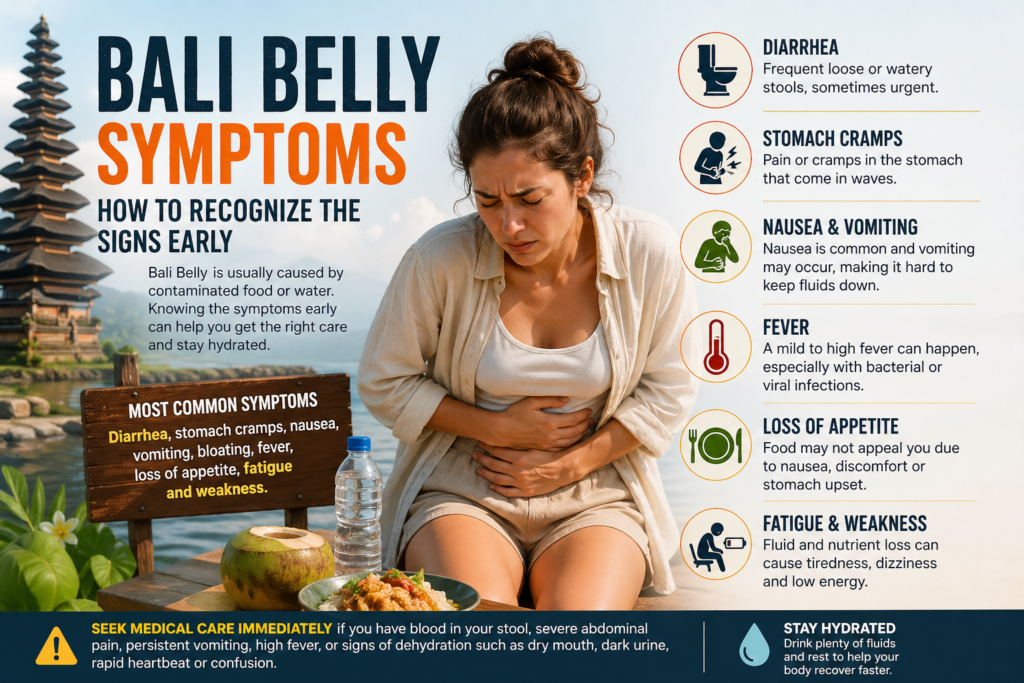
Bali Belly is a common term used in Bali to describe sudden stomach problems such as diarrhea, nausea, vomiting, stomach cramps, and sometimes fever. It often happens after consuming contaminated food or water and is similar to traveler’s diarrhea. While most cases improve within a few days, the first hours are important to prevent dehydration and complications.
The first thing to do is replace lost fluids immediately. Diarrhea and vomiting can cause the body to lose water and important minerals very quickly. Drink oral rehydration solution if available because it helps restore both fluids and electrolytes better than plain water. If oral rehydration solution is not available, drink small amounts of water frequently to avoid worsening nausea.
Rest is important because the body needs energy to recover. Avoid physical activities, stay in a cool place, and allow your digestive system to settle. If vomiting is present, take small sips of fluid every few minutes instead of drinking a large amount at once.
Avoid heavy meals, spicy foods, oily foods, dairy products, alcohol, and caffeine. These can irritate the stomach and make diarrhea worse. If you feel hungry, choose simple foods such as plain rice, bananas, toast, or crackers.
Pay attention to warning signs. If there is blood in the stool, high fever, severe weakness, confusion, intense stomach pain, or inability to keep fluids down, medical care is urgent and should not be delayed.
Do not take antibiotics without medical advice because not all cases of Bali Belly are caused by bacteria. In some cases, the wrong antibiotic can make the condition worse or delay proper treatment.
Good hygiene is also important. Wash hands with soap after using the toilet and before eating to reduce the risk of spreading infection to others.
If symptoms continue for more than twenty four to forty eight hours, dehydration becomes worse, or weakness increases, contact a doctor immediately.
Journal Sources
Tay WL, Chien JM, Poulose V, How CH, Ng MCW. Acute gastroenteritis in adults. Gastroenterology Singapore Medical Journal. 2025. Rehydration remains the cornerstone of treatment for acute gastroenteritis and oral rehydration solution is recommended in moderate to severe fluid loss
Khokhare B et al. Efficacy and Safety of a Novel Oral Rehydration Solution in Managing Diarrhea and Dehydration. Cureus. 2026. Oral rehydration therapy showed effective improvement in diarrhea symptoms and hydration status in adult patients