Traveling to Bali is an unforgettable experience—beautiful beaches, rich culture, and incredible food. But for many travelers, one health concern often comes up: Bali Belly.
Bali Belly is the common term for traveler’s diarrhea or digestive illness that can affect visitors when they are exposed to unfamiliar bacteria, viruses, or contaminated food and water. While it’s usually not serious, it can be uncomfortable enough to interrupt your holiday.
Here’s everything you need to know about Bali Belly in 2026, including symptoms, causes, treatment, and recovery.
What Is Bali Belly?
Bali Belly is not a medical diagnosis. It’s a slang term used by travelers in Bali to describe stomach infections that cause digestive problems such as diarrhea, nausea, and cramps.
It can happen when your digestive system encounters bacteria or microorganisms it isn’t used to.
The most common causes include:
- Bacterial infections (such as E. coli)
- Viral infections
- Parasites
- Food contamination
- Unsafe drinking water
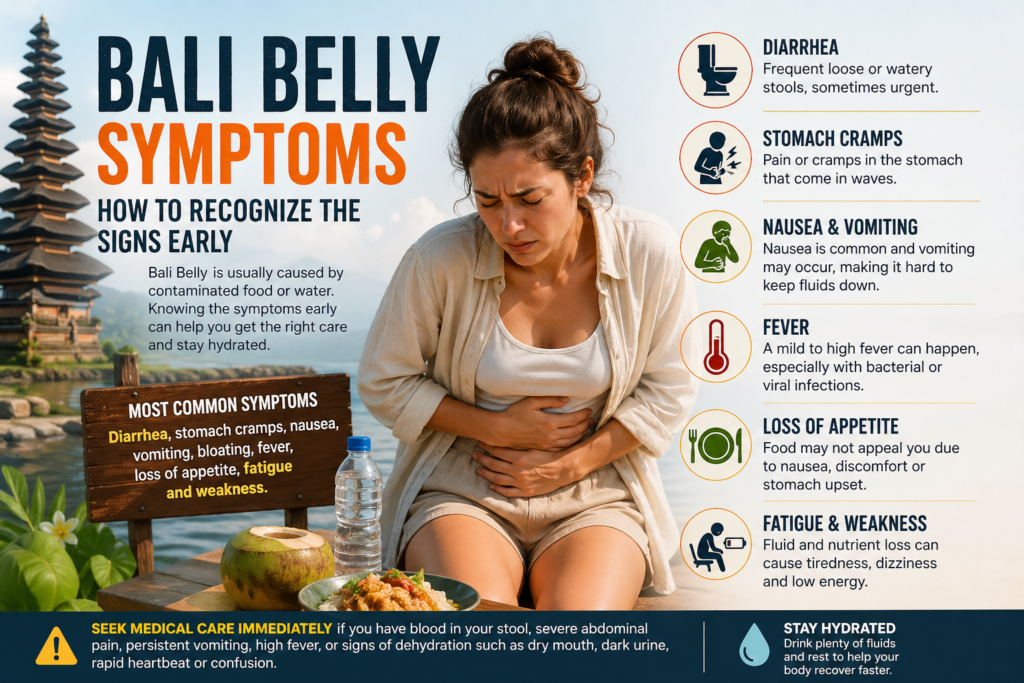
Bali Belly Symptoms
Symptoms usually appear within a few hours to a few days after consuming contaminated food or water.
Common Bali Belly symptoms include:
1. Diarrhea
The most common symptom. It may be frequent and urgent.
2. Stomach Cramps
Pain or discomfort in the abdomen is very common.
3. Nausea
You may feel constantly sick or unable to eat.
4. Vomiting
Some cases include vomiting, especially in stronger infections.
5. Bloating
Gas and stomach swelling can occur.
6. Fever
A mild fever can happen if your body is fighting infection.
7. Fatigue
Dehydration and nutrient loss can make you feel weak.
8. Loss of Appetite
Many people temporarily lose interest in food.
What Causes Bali Belly?
Bali Belly is usually linked to food, water, or hygiene-related contamination.
Unsafe Drinking Water
Tap water in Bali is not recommended for drinking.
Even small exposure—such as brushing your teeth or swallowing shower water—can affect sensitive travelers.
Contaminated Food
Food that is:
- Undercooked
- Left out too long
- Handled poorly
can carry harmful bacteria.
Ice Made from Unfiltered Water
Ice can sometimes be the source if it’s not made from purified water.
Poor Hand Hygiene
Touching contaminated surfaces and eating without washing hands increases risk.
Sudden Diet Changes
Spicy food, oily food, and unfamiliar ingredients can upset your digestive system.
How Long Does Bali Belly Last?
For most people, Bali Belly lasts:
- 24 to 72 hours for mild cases
- 3 to 7 days for moderate cases
Some infections may last longer, especially if parasites are involved.
Recovery depends on hydration, rest, and proper care.
Bali Belly Treatment
Treatment focuses on hydration, symptom management, and recovery.
1. Rehydrate Immediately
Diarrhea and vomiting cause fluid loss quickly.
Best options:
- Electrolytes
- Oral rehydration salts
- Coconut water
- Bottled water
Avoid dehydration at all costs.
2. Rest
Your body needs energy to recover.
Avoid intense activities, beach clubs, and alcohol while recovering.
3. Eat Simple Foods
Stick to bland foods like:
- Plain rice
- Bananas
- Toast
- Crackers
- Boiled potatoes
Avoid:
- Dairy
- Fried food
- Spicy food
- Heavy meals
4. Take Anti-Diarrheal Medicine (If Needed)
Medications like loperamide may help reduce symptoms temporarily.
However, avoid stopping diarrhea completely if your body is actively clearing infection.
5. Probiotics
Probiotics may help restore gut balance faster.
They can be useful during recovery.
When to See a Doctor
Seek medical attention if you experience:
- High fever
- Blood in stool
- Severe dehydration
- Continuous vomiting
- Symptoms lasting more than 3–5 days
- Extreme weakness
Tourist areas like Seminyak, Canggu, and Ubud have clinics familiar with traveler-related illnesses.
How to Recover Faster from Bali Belly
Here are practical recovery tips:
Stay Hydrated
Drink small amounts frequently.
Avoid Alcohol
Alcohol worsens dehydration.
Avoid Coffee
Coffee can irritate your stomach.
Sleep More
Recovery improves with proper rest.
Reintroduce Food Slowly
Start light before returning to normal meals.
How to Prevent Bali Belly
Prevention is always better than treatment.
Follow these simple rules:
- Drink bottled or filtered water
- Avoid tap water
- Wash hands often
- Eat freshly cooked food
- Avoid raw foods when possible
- Be careful with ice
- Choose clean, busy restaurants
- Carry hand sanitizer
Is Bali Belly Serious?
Usually no.
Most cases are mild and improve with rest and hydration.
But severe infections can become dangerous if dehydration is ignored.
Pay attention to warning signs.
Final Thoughts
Bali Belly is one of the most common travel health issues in Bali, but it’s manageable and often preventable.
The key is understanding the symptoms early, treating it properly, and giving your body time to recover.
With smart food choices, good hygiene, and proper hydration, you can reduce your risk and enjoy your Bali trip with confidence.