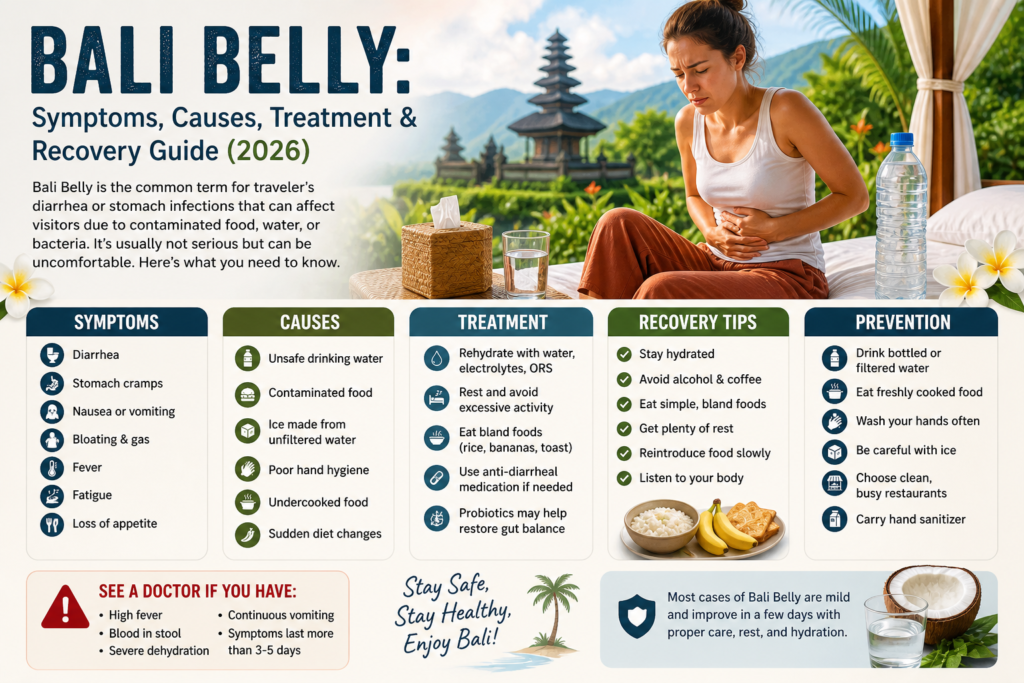


How to Get Rid of Bali Belly: Causes, Symptoms, Treatment & Prevention
How to Get Rid of Bali Belly: The Complete Guide for Travelers If you’re planning a trip to Indonesia or are already enjoying your vacation in Bali, you’ve probably heard about Bali Belly. While the name sounds harmless, it refers to a common form of travelers’ diarrhea that can quickly disrupt your holiday. The good news is that most cases of Bali Belly are mild and can be treated at home with proper hydration, rest, and supportive care. Knowing what causes it, how to recognize the symptoms, and when to seek medical attention can help you recover faster and enjoy the rest of your trip. In this comprehensive guide, we’ll explain everything you need to know about how to get rid of Bali Belly safely and effectively. What Is Bali Belly? Bali Belly is an informal term used to describe gastrointestinal illness that travelers may experience while visiting Bali or other tropical destinations. It is most commonly caused by consuming food or water contaminated with bacteria, viruses, or parasites that your digestive system isn’t accustomed to. Common organisms include: Although uncomfortable, most people recover within 24 to 72 hours. Common Symptoms of Bali Belly Symptoms usually appear within several hours to three days after exposure. Typical symptoms include: Some people experience only mild digestive discomfort, while others may develop more severe dehydration. How to Get Rid of Bali Belly Quickly 1. Stay Hydrated The biggest risk with Bali Belly is dehydration caused by diarrhea and vomiting. Drink plenty of: Take small sips frequently if you’re feeling nauseous. 2. Rest Your Body Your immune system needs energy to fight the infection. Get plenty of sleep and avoid strenuous activities, especially if you’re losing fluids. 3. Eat Easy-to-Digest Foods Once vomiting has settled, choose bland foods that are gentle on the stomach. Recommended foods include: Avoid: 4. Consider Oral Rehydration Salts Oral Rehydration Salts (ORS) replace important minerals lost during diarrhea. They are available at most pharmacies and are one of the most effective treatments for preventing dehydration. 5. Use Anti-Diarrheal Medication Carefully Some adults may benefit from anti-diarrheal medications to reduce symptoms during travel. However, they should generally be avoided if you have: These medications may slow the removal of harmful bacteria from the body. If you’re unsure, consult a healthcare professional before using them. 6. Antibiotics Are Not Always Necessary Many cases of Bali Belly are viral and will improve without antibiotics. A doctor may prescribe antibiotics if: Avoid self-prescribing antibiotics, as inappropriate use can contribute to antibiotic resistance and may not help if the illness is viral. 7. Consider Probiotics Some evidence suggests probiotics may help restore healthy gut bacteria and shorten recovery in certain cases. They may also be useful after completing antibiotics, although results vary between individuals. Natural Home Remedies for Bali Belly Along with hydration and rest, some travelers find relief from: Natural remedies can provide comfort but should not replace medical treatment if symptoms become severe. When Should You See a Doctor? Seek medical attention immediately if you experience: Children, pregnant women, older adults, and people with weakened immune systems should seek medical care sooner if symptoms develop. How Long Does Bali Belly Last? Most cases improve within: Persistent symptoms lasting beyond one week should be evaluated by a healthcare provider to rule out parasitic infections or other causes. How to Prevent Bali Belly Prevention is always better than treatment. Follow these practical tips: Drink Safe Water Eat Freshly Cooked Food Choose food that is: Avoid food that has been sitting out for long periods. Wash Your Hands Wash hands regularly with soap and water, especially before eating. Carry an alcohol-based hand sanitizer when soap isn’t available. Be Careful with Ice If you’re unsure whether ice was made from treated water, it’s safer to skip it. Peel Fruits Yourself Choose fruits with protective skins, such as: Wash and peel them yourself whenever possible. Can You Still Enjoy Your Bali Trip? Absolutely. Millions of visitors travel to Bali every year without developing Bali Belly. Practicing good food and water hygiene significantly reduces your risk. Even if you do become ill, most cases resolve quickly with hydration, rest, and supportive care. Being prepared with travel insurance, oral rehydration salts, and knowledge of local medical facilities can provide extra peace of mind. Frequently Asked Questions Is Bali Belly contagious? It can be. Some causes, especially viral infections like norovirus, can spread from person to person through contaminated hands, food, or surfaces. Can I fly with Bali Belly? If symptoms are mild and improving, many people can travel. However, severe diarrhea, dehydration, or vomiting should be treated before flying whenever possible. Should I stop eating completely? No. Once vomiting settles, eating small amounts of bland food can help your recovery. Focus on hydration first if you are unable to tolerate food. Can probiotics prevent Bali Belly? Research suggests probiotics may modestly reduce the risk of travelers’ diarrhea in some people, but they do not guarantee prevention. Good hygiene and safe food and water practices remain the most effective preventive measures. Final Thoughts Bali Belly is an unpleasant but usually short-lived illness that affects some travelers visiting Bali and other tropical destinations. The fastest path to recovery involves staying well hydrated, resting, eating bland foods, and seeking medical care if symptoms become severe or prolonged. By following sensible food and water precautions before and during your trip, you can greatly reduce your risk and spend more time enjoying Bali’s beaches, culture, and unforgettable experiences rather than recovering in your hotel room.