How to Avoid Bali Belly in Bali: Prevention Tips for Travelers
Planning a trip to Bali? Between the beaches, waterfalls, rice terraces, and vibrant food scene, it’s easy to get swept up in the adventure. But there’s one thing many travelers worry about before arriving: Bali Belly.
“Bali Belly” is the common term for traveler’s diarrhea or stomach infections that can happen when your digestive system reacts to unfamiliar bacteria, viruses, contaminated food, or unsafe water. While it’s usually temporary, it can disrupt your holiday and leave you stuck in your hotel instead of exploring the island.
The good news: Bali Belly is often preventable. Here’s how to reduce your risk and enjoy your trip.
What Causes Bali Belly?
Bali Belly isn’t caused by Bali itself—it’s usually caused by exposure to bacteria such as E. coli, viruses, parasites, or poor food hygiene. For many travelers, the body simply isn’t used to local bacteria.
Common triggers include:
- Drinking untreated tap water
- Ice made from unsafe water
- Eating undercooked food
- Consuming food left out too long
- Poor hand hygiene
- Cross-contamination in food preparation
Understanding the causes is the first step in prevention.
1. Drink Bottled or Filtered Water
One of the most important Bali Belly prevention tips is simple: avoid tap water.
In Bali, tap water is not recommended for drinking. Use sealed bottled water or refill at trusted filtered-water stations.
Tips:
- Check the seal before opening bottled water
- Use bottled water for brushing your teeth if you have a sensitive stomach
- Avoid swallowing shower water
2. Be Careful with Ice
Ice can be safe—but only if made from filtered water.
In many restaurants and cafés in tourist areas like Canggu, Ubud, and Seminyak, commercial ice is generally safe. However, if you’re eating in remote areas or small warungs, it’s worth asking.
Look for tube-shaped ice with holes in the middle, as this is often factory-produced.
3. Choose Busy Restaurants
A busy restaurant usually means faster food turnover and fresher ingredients.
When choosing where to eat:
- Look for high customer traffic
- Check cleanliness of tables and kitchen areas
- Read recent reviews
- Watch how staff handle food
Popular places with strong hygiene standards are often safer than empty spots.
4. Avoid Raw or Undercooked Food
Raw foods can carry bacteria if washed in untreated water.
Be cautious with:
- Salads
- Raw seafood
- Rare meat
- Unpeeled fruits
A good rule: boil it, cook it, peel it, or leave it.
5. Wash Your Hands Frequently
Hand hygiene is one of the easiest ways to prevent Bali Belly.
Wash your hands:
- Before eating
- After using the bathroom
- After handling cash
- After touching public surfaces
Carry hand sanitizer for times when soap isn’t available.
6. Be Smart with Street Food
Street food in Bali can be amazing—but choose wisely.
Tips for safer street food:
- Eat where locals eat
- Choose stalls with high turnover
- Make sure food is cooked fresh in front of you
- Avoid food sitting out in the heat
Fresh and hot is always better.
7. Don’t Overload Your Stomach on Day One
Your digestive system may need time to adjust.
When you first arrive in Bali:
- Avoid overeating
- Skip super spicy meals if you’re not used to them
- Introduce local food gradually
This helps your stomach adapt.
8. Watch Dairy Consumption
Some travelers mistake lactose intolerance for Bali Belly.
If you’re sensitive to dairy, be careful with:
- Milk-based smoothies
- Cheese-heavy meals
- Ice cream
Heat and travel stress can make digestion harder.
9. Stay Hydrated and Support Your Gut
A healthy digestive system handles new bacteria better.
Before and during travel:
- Drink enough water
- Eat fiber-rich foods
- Consider probiotics (if suitable for you)
- Limit excessive alcohol
Hydration is especially important in Bali’s tropical climate.
10. Pack a Travel Stomach Kit
Be prepared in case symptoms start.
Useful items:
- Oral rehydration salts
- Anti-diarrheal medication
- Electrolytes
- Probiotics
- Basic pain relief
Having essentials ready can save time.
What If You Get Bali Belly?
Even careful travelers can get sick.
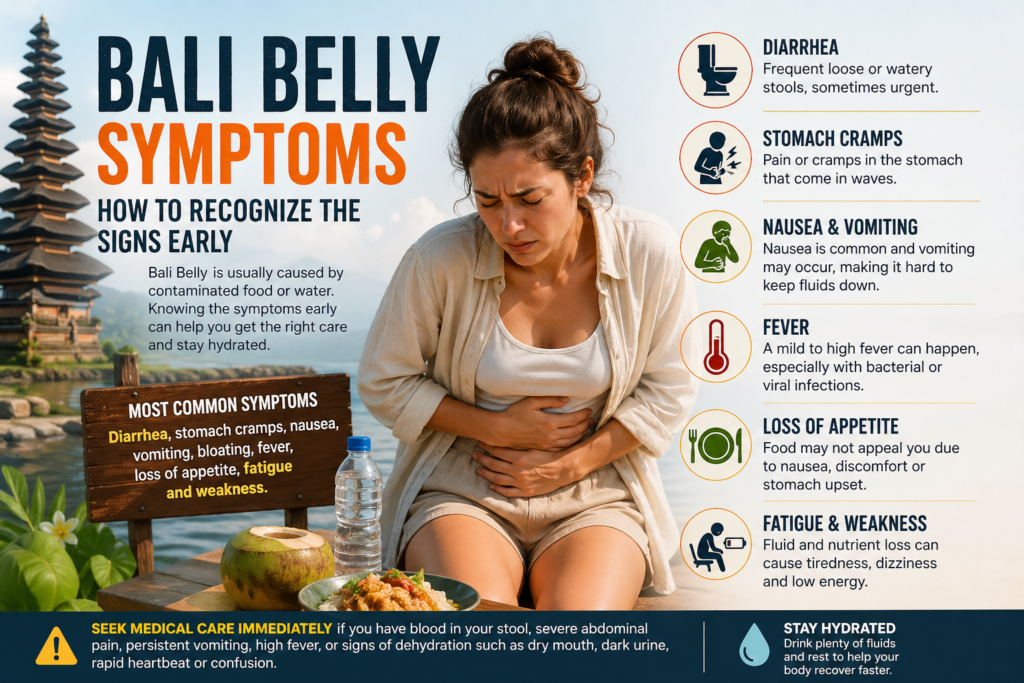
Common symptoms:
- Diarrhea
- Stomach cramps
- Nausea
- Vomiting
- Fever
- Dehydration
If symptoms are mild:
- Rest
- Hydrate
- Eat bland foods like rice, bananas, and toast
If symptoms are severe (blood in stool, high fever, dehydration, or lasting more than a few days), seek medical attention.
Final Thoughts
Bali Belly can happen, but it doesn’t have to ruin your trip. With smart food choices, safe drinking habits, and good hygiene, you can significantly lower your risk.
The goal isn’t to avoid enjoying Bali’s incredible food culture—it’s to enjoy it safely.
Travel smart, eat wisely, and make the most of your time in Bali.