What Is Bali Belly?
If you’re traveling to Bali, you’ve probably heard the term “Bali Belly.” It’s a common name for traveler’s diarrhea, a digestive illness caused by consuming contaminated food or water, changes in gut bacteria, or exposure to unfamiliar viruses and parasites.
While Bali Belly is usually mild and resolves within a few days, it can quickly disrupt your vacation. Fortunately, the right remedies can help relieve symptoms and speed up recovery.
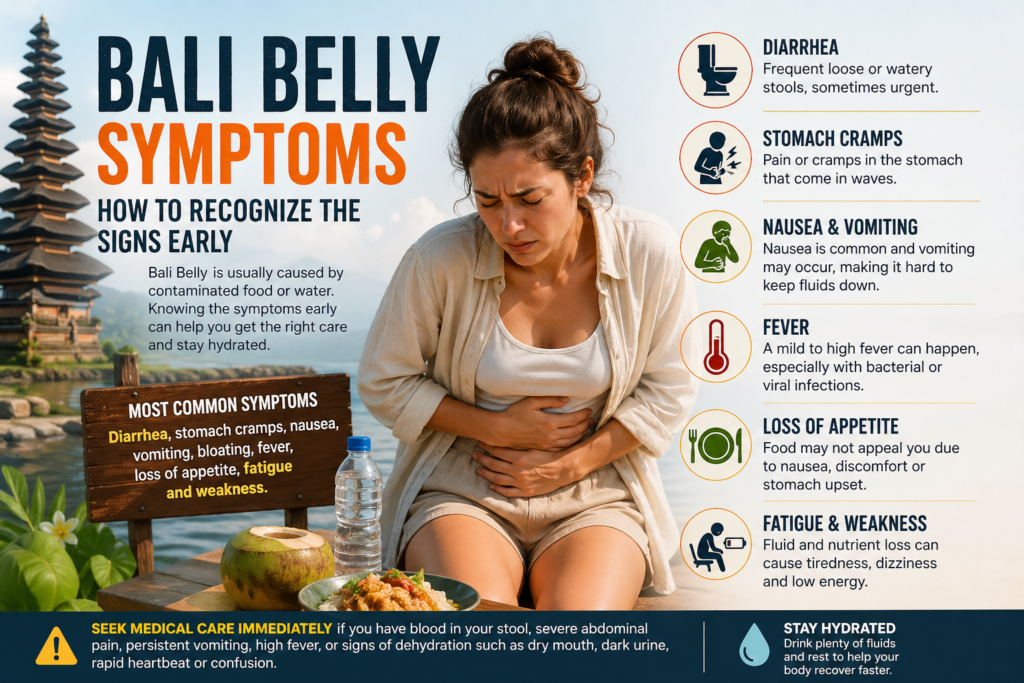
Common Symptoms of Bali Belly
Symptoms typically appear within a few hours to several days after exposure and may include:
- Frequent diarrhea
- Stomach cramps
- Nausea and vomiting
- Bloating
- Fever (in some cases)
- Fatigue and weakness
- Dehydration
If symptoms become severe or last longer than three days, medical attention is recommended.
Best Remedies for Bali Belly
1. Stay Hydrated
The biggest risk of Bali Belly is dehydration caused by diarrhea and vomiting.
Drink plenty of:
- Bottled or purified water
- Oral Rehydration Salts (ORS)
- Coconut water (for natural electrolytes)
- Clear broths
Avoid alcohol, sugary drinks, and excessive caffeine until you’ve fully recovered.
2. Replace Lost Electrolytes
Diarrhea causes your body to lose important minerals like sodium and potassium.
Oral Rehydration Solution (ORS) is one of the most effective remedies because it helps restore the body’s fluid balance much faster than water alone.
3. Eat Gentle, Easy-to-Digest Foods
Once your stomach settles, start eating bland foods such as:
- Plain rice
- Bananas
- Toast
- Plain crackers
- Boiled potatoes
- Applesauce
- Clear soup
Avoid spicy foods, fried meals, dairy products, and rich desserts until symptoms disappear.
4. Take Probiotics
Probiotics help restore healthy gut bacteria that may have been disrupted during illness.
Many travelers carry probiotic supplements before arriving in Bali, while others choose probiotic-rich foods like yogurt after symptoms improve.
5. Get Plenty of Rest
Your immune system works best when your body is well-rested.
Take a break from sightseeing, avoid strenuous activities, and allow your digestive system time to recover naturally.
6. Use Anti-Diarrheal Medication Carefully
Medications such as loperamide can reduce diarrhea temporarily, making travel more manageable.
However, they should not be used if you have:
- High fever
- Bloody diarrhea
- Suspected bacterial infection requiring medical treatment
Always follow the recommended dosage or consult a healthcare professional.
7. Antibiotics (Only When Necessary)
Most cases of Bali Belly improve without antibiotics.
Doctors may prescribe antibiotics if:
- Symptoms are severe
- Diarrhea persists for several days
- A bacterial infection is suspected
Never self-medicate with antibiotics without professional advice.
Natural Remedies That May Help
Some travelers find relief using natural remedies alongside hydration and rest.
These include:
- Ginger tea for nausea
- Peppermint tea to soothe stomach cramps
- Chamomile tea for digestive comfort
- Plain coconut water for hydration
Natural remedies may ease symptoms but should not replace medical treatment when symptoms are severe.
When Should You See a Doctor?
Seek medical attention immediately if you experience:
- Severe dehydration
- Persistent vomiting
- High fever
- Bloody stools
- Severe abdominal pain
- Symptoms lasting longer than 72 hours
- Diarrhea occurring more than 10 times a day
Young children, elderly travelers, pregnant women, and people with weakened immune systems should seek medical care earlier.
How to Prevent Bali Belly
Prevention is always better than treatment.
Follow these simple tips:
- Drink bottled or filtered water.
- Avoid ice unless you’re certain it’s made from purified water.
- Wash your hands regularly.
- Eat freshly cooked, hot meals.
- Peel fruits yourself.
- Choose restaurants with good hygiene practices.
- Carry hand sanitizer when traveling.
Even careful travelers can occasionally develop Bali Belly, but these precautions significantly reduce the risk.
Frequently Asked Questions
How long does Bali Belly usually last?
Most mild cases improve within 24 to 72 hours, although some infections may last up to one week.
Is Bali Belly contagious?
Some infections that cause Bali Belly can spread from person to person through poor hygiene. Frequent handwashing helps reduce transmission.
Can I still travel with Bali Belly?
If symptoms are mild, you may continue traveling while staying hydrated. However, if symptoms are severe, it’s best to rest and seek medical care.
Should I avoid eating completely?
No. Once vomiting has settled, eating small amounts of bland food can help your digestive system recover.
Final Thoughts
Bali Belly is one of the most common travel-related illnesses among visitors to Bali, but it is usually short-lived and manageable with proper care. Staying hydrated, replacing electrolytes, resting, eating bland foods, and seeking medical attention when necessary can help you recover quickly and get back to enjoying your holiday.
If symptoms become severe, involve bloody diarrhea, high fever, or signs of dehydration, don’t delay seeking professional medical care. Prompt treatment can prevent complications and ensure a safe recovery.
Disclaimer: This article is for informational purposes only and should not replace professional medical advice, diagnosis, or treatment. Always consult a qualified healthcare provider if you have severe symptoms or concerns about your health.