Planning a trip to Bali? From stunning beaches and lush rice terraces to vibrant cafés and world-class resorts, Bali is one of the world’s most popular travel destinations. However, many visitors have heard about an unwelcome travel companion known as “Bali Belly.”
The good news is that Bali Belly is often preventable. By following simple food safety and hygiene practices, you can significantly reduce your risk and spend more time enjoying your vacation instead of recovering in your hotel room.
This guide covers everything you need to know about preventing Bali Belly, including safe eating habits, drinking water precautions, and practical travel health tips.
What Is Bali Belly?
Bali Belly is a common term used to describe traveler’s diarrhea experienced by visitors to Bali and other tropical destinations. It is usually caused by consuming food or water contaminated with bacteria, viruses, or parasites.
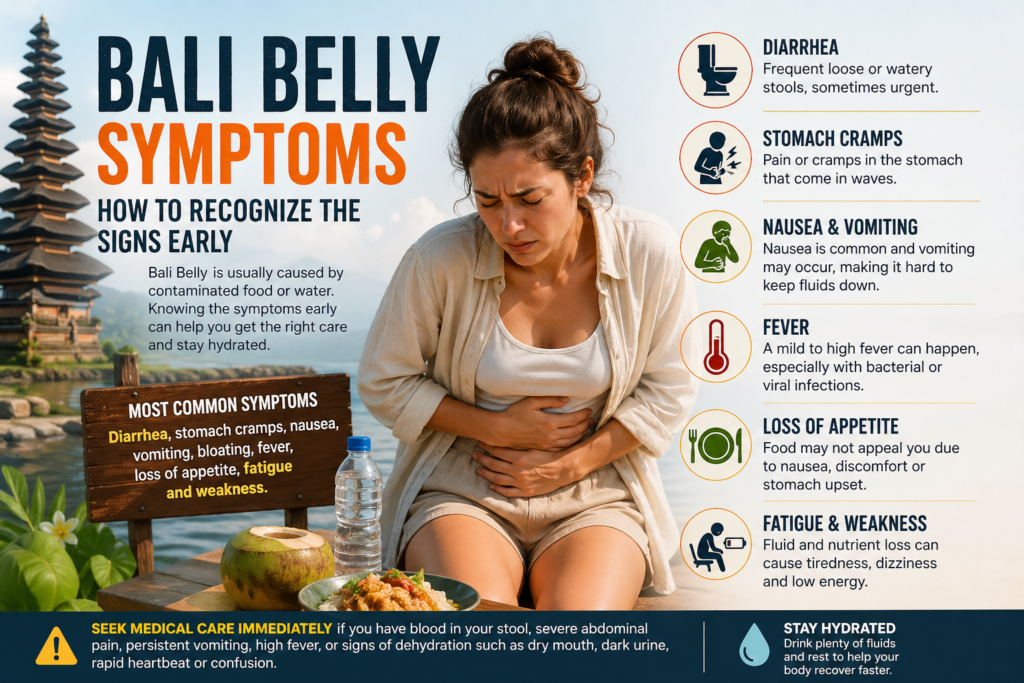
Common symptoms include:
- Frequent diarrhea
- Stomach cramps
- Nausea or vomiting
- Bloating
- Fever (sometimes)
- Fatigue
- Dehydration
Symptoms typically develop within 6 to 72 hours after exposure and usually last 1–5 days, although some infections can persist longer if left untreated.
Why Do Travelers Get Bali Belly?
Your digestive system is adapted to the bacteria found in your home country. When traveling abroad, your body encounters unfamiliar microorganisms that may cause gastrointestinal illness.
The most common sources include:
- Contaminated drinking water
- Ice made from unsafe water
- Poorly handled food
- Undercooked meat or seafood
- Unwashed fruits and vegetables
- Cross-contamination during food preparation
Even reputable restaurants can occasionally experience food safety issues, making prevention important wherever you eat.
Safe Drinking Tips in Bali
1. Drink Bottled or Filtered Water
Tap water in Bali is not considered safe for drinking.
Choose:
- Factory-sealed bottled water
- Water from reputable refill stations
- Properly filtered water provided by trusted hotels or villas
Always check that bottled water seals are intact before opening.
2. Be Careful With Ice
Most established restaurants, hotels, and cafés use commercially produced food-grade ice that is generally considered safe.
However, if you’re eating at smaller roadside establishments and you’re unsure about the ice source, it’s safer to order drinks without ice.
3. Brush Your Teeth With Safe Water
Many travelers also use bottled or filtered water when brushing their teeth, especially if they have sensitive stomachs.
While accidental exposure is usually minimal, this extra precaution can reduce risk.
4. Keep Hydrated
Bali’s tropical climate can quickly lead to dehydration.
Drink plenty of:
- Bottled water
- Electrolyte drinks
- Oral rehydration solutions when needed
Staying hydrated also helps your body recover more quickly if mild digestive symptoms occur.
Safe Eating Tips in Bali
1. Choose Busy Restaurants
Restaurants with a high customer turnover are generally a safer choice because food ingredients are replenished more frequently.
Busy establishments often maintain:
- Fresher ingredients
- Better food rotation
- Higher hygiene standards
2. Eat Food That Is Freshly Cooked
Hot, freshly prepared meals are generally safer than food that has been sitting at room temperature.
Look for food served:
- Steaming hot
- Fresh off the grill
- Cooked to order
3. Avoid Undercooked Meat and Seafood
Raw or partially cooked foods carry a higher risk of contamination.
Make sure:
- Chicken is fully cooked
- Seafood is freshly prepared
- Eggs are thoroughly cooked
- Pork and beef reach safe cooking temperatures
4. Wash or Peel Fruits
Fresh tropical fruit is one of Bali’s highlights.
For extra safety:
- Peel fruits yourself whenever possible.
- Wash produce using safe drinking water if preparing it yourself.
- Choose fruits with thick skins such as bananas, oranges, mangoes, and papayas.
5. Be Selective With Salads
Raw vegetables may have been washed using untreated water.
Choose salads from:
- Well-reviewed restaurants
- Hotels
- Cafés known for good hygiene practices
If you’re unsure, cooked vegetables are usually the safer option.
6. Enjoy Street Food Carefully
Bali’s street food can be delicious and authentic.
To minimize risk:
- Visit busy food stalls with high turnover.
- Watch food being cooked fresh.
- Avoid food sitting uncovered for long periods.
- Check that vendors use clean utensils.
Many travelers enjoy street food without problems by choosing vendors carefully.
Practice Good Hand Hygiene
One of the easiest ways to prevent illness is proper hand hygiene.
Wash your hands:
- Before eating
- After using the restroom
- After handling money
- After touching animals
When soap and water aren’t available, use an alcohol-based hand sanitizer containing at least 60% alcohol.
Avoid Cross-Contamination
Even safe food can become contaminated through improper handling.
Simple precautions include:
- Use clean utensils.
- Avoid sharing drinks or eating utensils.
- Store snacks properly.
- Keep reusable water bottles clean.
Should You Take Probiotics?
Some travelers choose to take probiotics before and during their trip to support digestive health.
While research suggests probiotics may reduce the risk of traveler’s diarrhea in some individuals, they do not guarantee protection and should not replace good food safety practices.
If you have underlying medical conditions or are immunocompromised, consult your healthcare provider before taking supplements.
Pack a Basic Travel Health Kit
A small travel medical kit can help you manage mild symptoms quickly.
Consider packing:
- Oral rehydration salts (ORS)
- Anti-diarrheal medication (when appropriate)
- Thermometer
- Hand sanitizer
- Electrolyte tablets
- Prescription medications
- Motion sickness medication if needed
Always follow medication instructions and seek medical advice if symptoms worsen.
When Should You See a Doctor?
Most cases of Bali Belly improve within a few days with rest and hydration.
However, seek medical attention if you experience:
- High fever
- Severe dehydration
- Bloody diarrhea
- Persistent vomiting
- Severe abdominal pain
- Symptoms lasting more than three days
- Signs of confusion or extreme weakness
Young children, older adults, pregnant travelers, and people with weakened immune systems should seek medical care sooner if symptoms develop.
Common Myths About Bali Belly
Myth: Only Street Food Causes Bali Belly
False. Illness can occur anywhere if food safety standards are compromised. Even upscale restaurants are not completely risk-free.
Myth: Alcohol Kills Harmful Bacteria
False. Drinking alcoholic beverages does not prevent foodborne illness.
Myth: Locals Never Get Bali Belly
False. Local residents can also develop gastrointestinal infections, although they may have greater immunity to certain local microorganisms.
Myth: Avoiding Indonesian Food Prevents Bali Belly
False. The risk depends on food handling and hygiene—not the cuisine itself.
Quick Bali Belly Prevention Checklist
Before eating or drinking, remember these essentials:
- ✔ Drink bottled or properly filtered water
- ✔ Eat freshly cooked meals
- ✔ Choose busy restaurants
- ✔ Wash or sanitize your hands regularly
- ✔ Peel fruits when possible
- ✔ Be cautious with raw foods
- ✔ Stay hydrated
- ✔ Carry oral rehydration salts
- ✔ Practice good food hygiene throughout your trip
Final Thoughts
Bali Belly is a common concern for travelers, but it doesn’t have to disrupt your holiday. By making smart food and water choices, practicing good hygiene, and staying prepared, you can greatly reduce your risk of gastrointestinal illness while enjoying everything Bali has to offer.
Most importantly, don’t let fear prevent you from experiencing Bali’s incredible culinary scene. From local warungs to fine dining restaurants, thousands of visitors safely enjoy Balinese cuisine every day by following sensible precautions.
A little preparation goes a long way toward ensuring your Bali adventure is remembered for its beautiful sunsets, vibrant culture, and unforgettable experiences—not an upset stomach.