What Is Bali Belly?
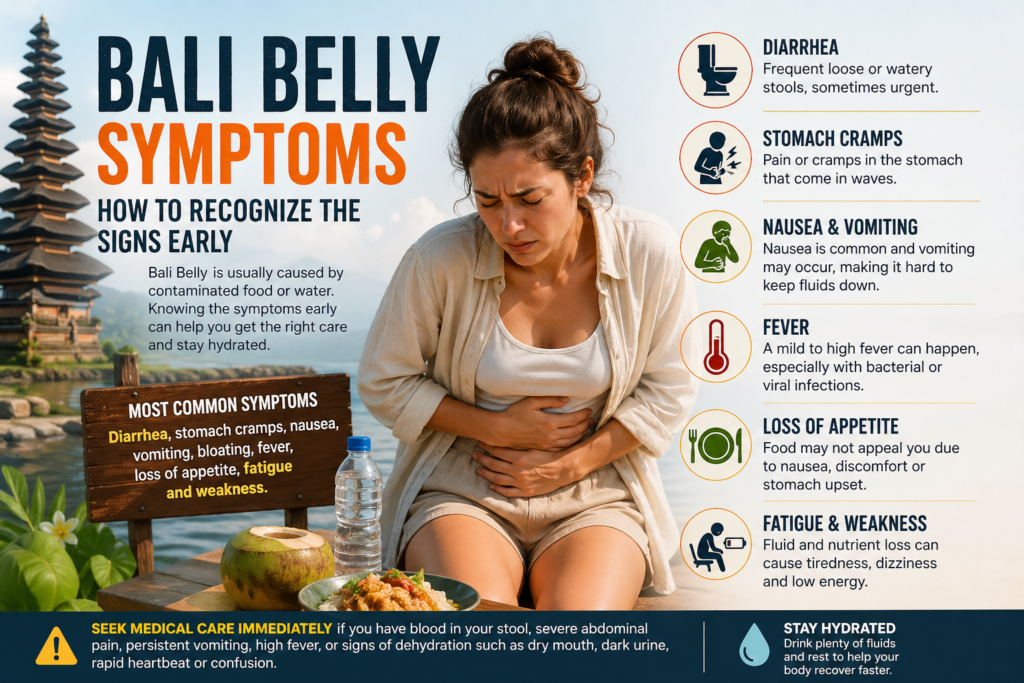
If you’ve suddenly developed diarrhea, stomach cramps, nausea, or vomiting during your holiday in Bali, you’re probably experiencing Bali Belly—the common nickname for traveler’s diarrhea.
Despite the name, Bali Belly isn’t unique to Bali. It can happen anywhere when your digestive system is exposed to unfamiliar bacteria, viruses, parasites, contaminated food, or unsafe drinking water. Most cases are mild and improve within 2–4 days with proper hydration and rest.
Common Symptoms of Bali Belly
Symptoms usually appear between 12 and 72 hours after eating contaminated food or drinking unsafe water.
Common signs include:
- Frequent watery diarrhea
- Stomach cramps
- Bloating
- Nausea
- Vomiting
- Loss of appetite
- Mild fever
- Fatigue
- General weakness
The biggest concern isn’t the diarrhea itself—it’s dehydration, especially in Bali’s hot and humid climate.
What to Do Immediately When You Have Bali Belly
1. Start Rehydrating Immediately
The first priority is replacing lost fluids and electrolytes.
Drink:
- Oral Rehydration Salts (ORS)
- Electrolyte drinks
- Bottled water
- Coconut water (if tolerated)
Take small sips frequently instead of drinking large amounts at once, particularly if you’re vomiting.
Avoid:
- Alcohol
- Excessive coffee
- Sugary soft drinks
- Tap water
Hydration is the single most important part of recovery.
2. Rest Your Digestive System
Your body needs energy to fight the infection.
Take a break from sightseeing, beach activities, and alcohol. Stay somewhere cool and rest as much as possible.
Most mild cases begin improving after one or two days with adequate hydration and sleep.
3. Eat Simple, Easy-to-Digest Foods
Once vomiting settles, begin eating small portions.
Recommended foods include:
- Plain white rice
- Bananas
- Toast
- Plain crackers
- Boiled potatoes
- Clear soup
- Applesauce
Avoid:
- Spicy food
- Fried food
- Dairy products
- Heavy fatty meals
- Large portions
Return to your normal diet gradually as symptoms improve.
4. Replace Lost Electrolytes
Diarrhea causes your body to lose important minerals such as:
- Sodium
- Potassium
- Chloride
Electrolyte replacement helps reduce fatigue, dizziness, and muscle cramps while supporting recovery.
ORS is generally more effective than plain water alone for moderate dehydration.
Should You Take Medication?
Treatment depends on the cause of your illness.
Anti-diarrheal medication
Medicines such as loperamide may help reduce diarrhea if you need to travel or fly, but they should be used cautiously and generally avoided if you have:
- High fever
- Bloody diarrhea
- Suspected bacterial infection
Antibiotics
Not everyone with Bali Belly needs antibiotics.
Many cases are viral or resolve without antibiotic treatment. Taking antibiotics unnecessarily may not help and could contribute to antibiotic resistance or side effects. Antibiotics should only be used after medical assessment when appropriate.
When Should You See a Doctor?
Seek medical attention immediately if you experience:
- Fever above 38.5°C (101.3°F)
- Blood in your stool
- Persistent vomiting
- Severe abdominal pain
- Signs of dehydration
- Confusion
- Very dark urine
- Inability to keep fluids down
- Symptoms lasting longer than 48–72 hours without improvement
Older adults, young children, pregnant women, and people with weakened immune systems should seek medical care sooner because they are at higher risk of complications.
Do You Need an IV Drip?
Most people recover without intravenous (IV) fluids.
However, an IV drip may be appropriate if:
- You cannot keep fluids down
- You have moderate to severe dehydration
- Continuous vomiting prevents oral hydration
- A doctor determines you require rapid fluid replacement
IV therapy should be provided under medical supervision after an appropriate assessment.
How Long Does Bali Belly Last?
Recovery varies depending on the cause.
Typical timeline:
- Mild cases: 24–48 hours
- Moderate cases: 2–4 days
- More severe infections: up to one week
Persistent diarrhea beyond one week may indicate a parasitic infection or another medical condition requiring further evaluation.
Can You Prevent Bali Belly?
While no method eliminates the risk completely, these habits significantly reduce your chances of getting sick.
- Drink sealed bottled or properly filtered water.
- Avoid drinking tap water.
- Wash your hands before eating.
- Use hand sanitizer when soap isn’t available.
- Eat food that is freshly cooked and served hot.
- Choose busy restaurants with high food turnover.
- Wash or peel fruit before eating.
- Avoid raw or undercooked meat and seafood.
These simple precautions can greatly reduce your risk of traveler’s diarrhea.
Frequently Asked Questions
Is Bali Belly contagious?
Yes. Some bacterial and viral causes can spread through contaminated food, water, or poor hand hygiene. Washing your hands thoroughly helps reduce transmission.
Can I still go sightseeing?
If you have ongoing diarrhea or vomiting, it’s best to rest. Continuing strenuous activities may worsen dehydration and delay recovery.
Is Bali Belly dangerous?
Most cases are mild and resolve without complications. The greatest risk is dehydration, which can become serious if not treated promptly.
Can I drink coffee?
It’s better to avoid coffee until you’re fully recovered because caffeine may worsen dehydration and irritate your stomach.
Final Thoughts
Getting Bali Belly can disrupt your holiday, but most travelers recover quickly with the right care.
Focus on staying hydrated, resting, eating bland foods, and monitoring your symptoms. If your condition worsens, you develop severe dehydration, high fever, or blood in your stool, seek medical attention promptly.
With early treatment and proper hydration, most people are back to enjoying their Bali vacation within just a few days.